This morning, the status field in App Store Connect flipped to a green "Ready for Distribution". I stared at that line for a while. This note skips the architecture and the pricing tables — just this once, let me tell you about the road.
It started as a Christmas-break toy
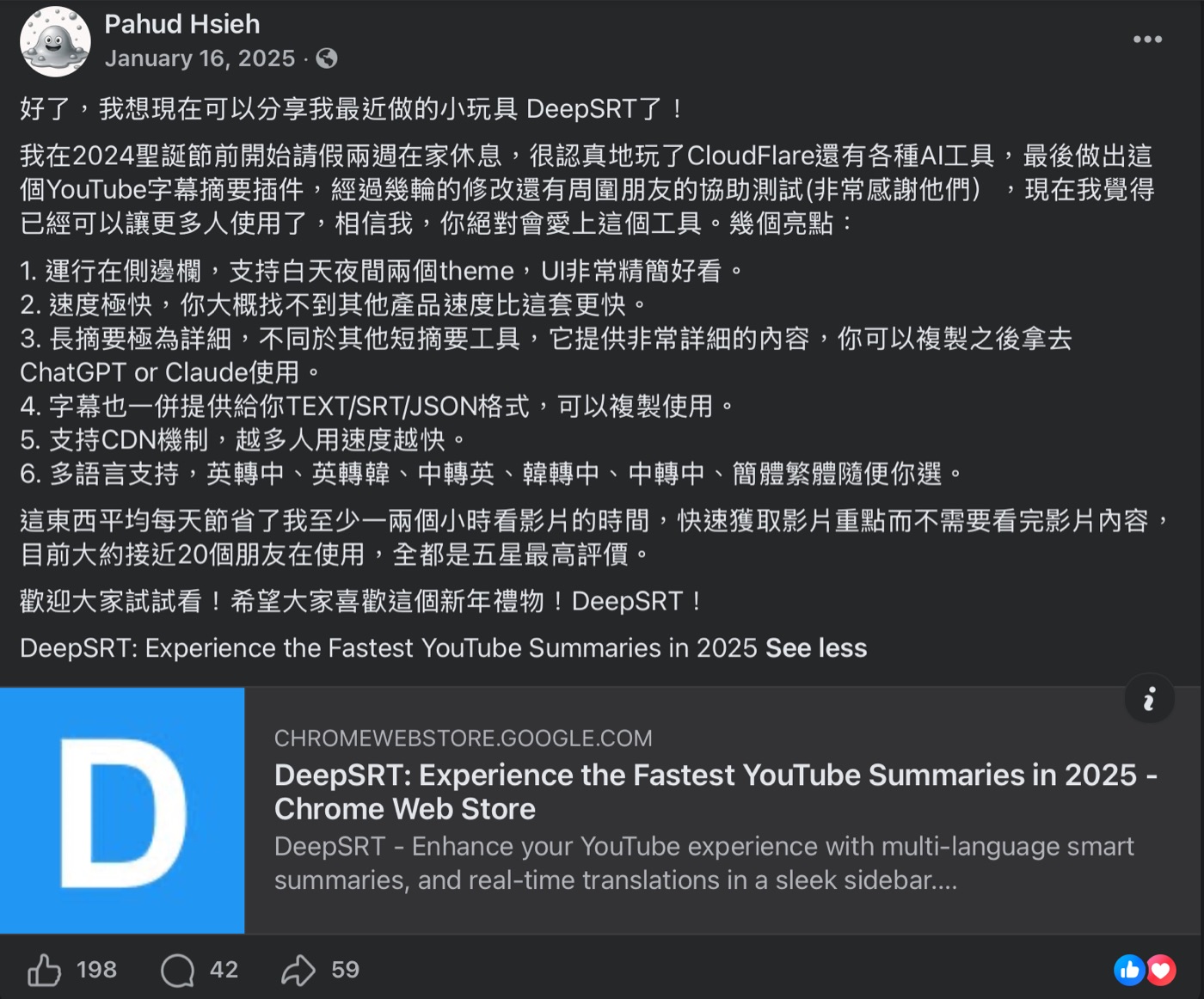
Before Christmas 2024 I took two weeks off, spent them seriously playing with Cloudflare and every AI tool I could reach, and came out with a YouTube caption-and-summary extension. On January 16, 2025 I shared it publicly for the first time, calling it a "little new year gift". It had 22 installs — every one of them a friend I had personally strong-armed into installing it.
Then things started moving.
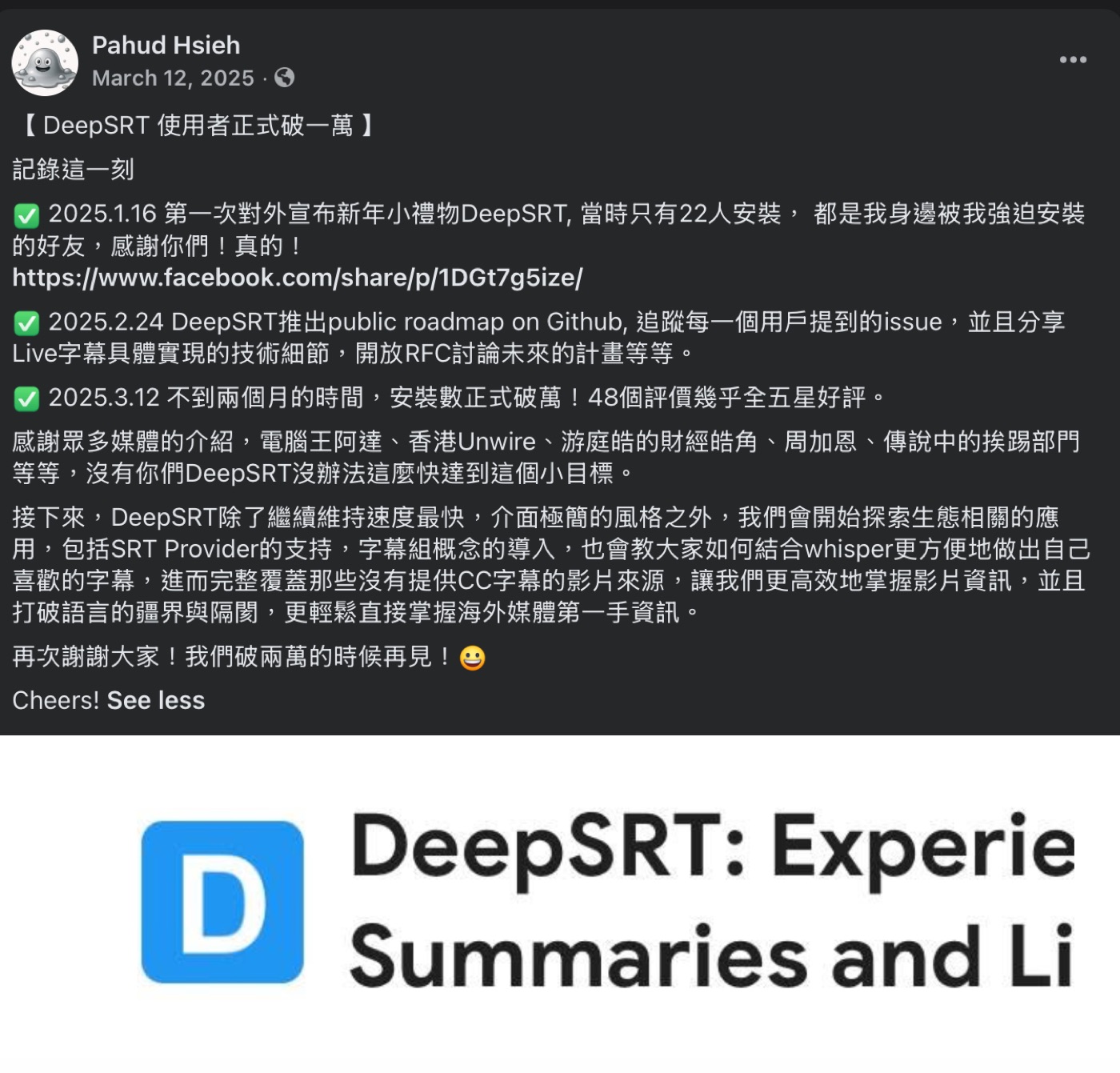
- 2025.1.16First public post — 22 installs, all friends
- 2025.2.24A public roadmap on GitHub: every user-reported issue tracked, the live-caption internals documented, future plans opened up as RFCs
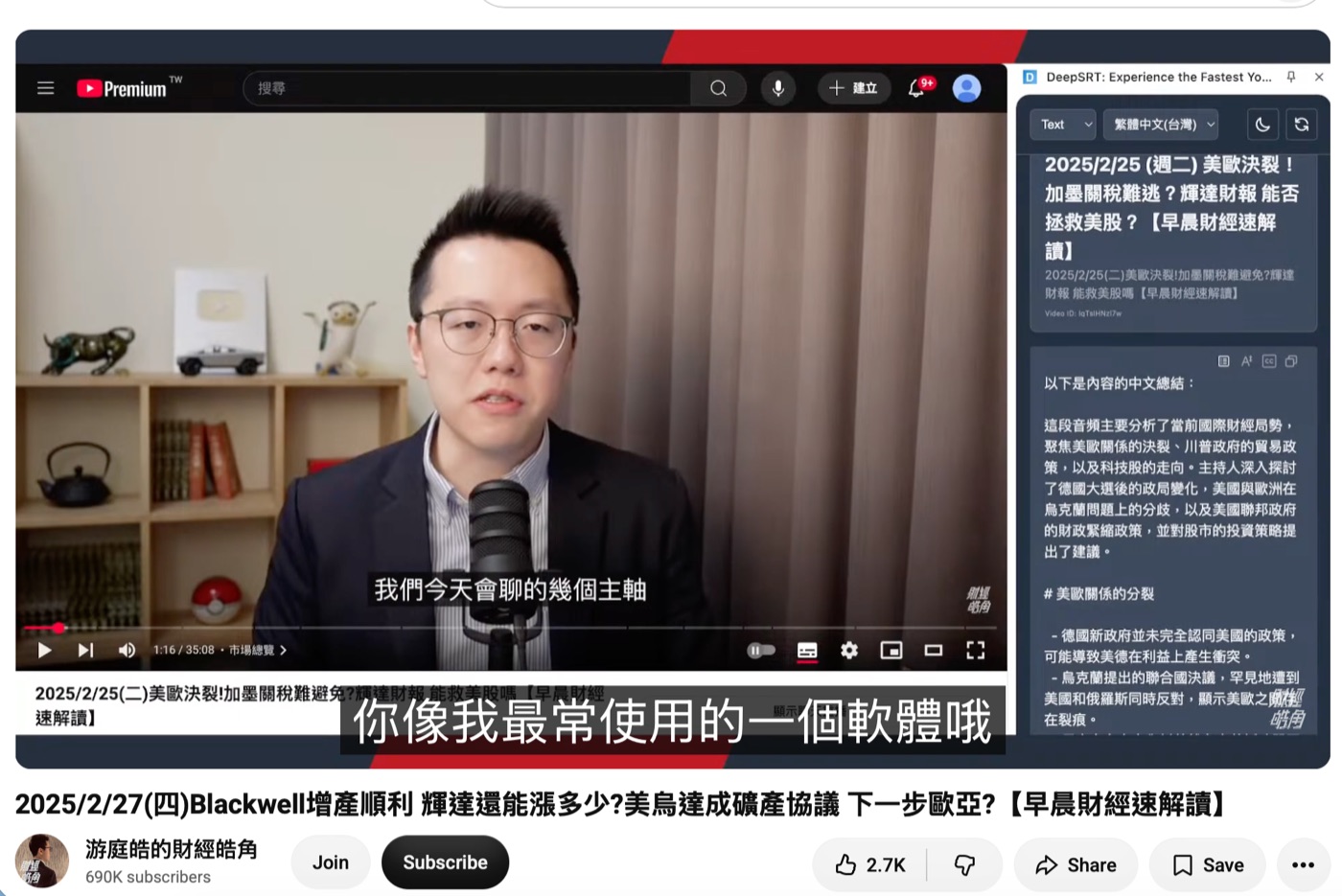
- 2025.2.26Well-known finance commentator Yu Ting-hao, live on air: "the software I use most — DeepSRT"
- 2025.3.12Under two months later, installs passed ten thousand. 48 reviews, nearly all five stars
Looking back, that February roadmap was the watershed — from that day on, this product grew up in public. The notes you're reading now are the same habit, continued.
Back then you didn't even provide an API key — every AI call was quietly paid for by us, behind a cloud of servers, proxy pools, and cache layers. All users saw was captions arriving on time.
It worked. Lots of people used it. Lots of people said thank you. But we knew: that cloud architecture was playing cat-and-mouse with a platform's risk systems, and the cat is always bigger. Every fix carried the knowledge that the next break was coming.
The decision to tear it down
This year we made the call: delete every server and move the whole product into a native Mac app. Your IP, your key, your machine — no middleman, and therefore none of a middleman's fragility.
The rewrite was more honest than we expected. Captions drifted, so we tore out the timeline assumptions and rebuilt them. The model world bloomed, so we handed the whole choice to you. The interface speaks seven languages, because people who watch foreign-language videos speak all kinds of languages themselves. Those stories are all in the earlier notes — this app grew up in public.
The review
The last mile before launch was App Review. A robot stopped us first: "why does your app listen on a network port?" — because that port is its soul: a local API bound to 127.0.0.1 that the free Chrome extension lives on. We explained. It let us through.
Then a human reviewer closed the main window and found no way to bring it back. They were right. We fixed it — the window now returns from the menu bar, from the Dock, from any deep link. Review can be an honest mirror: every issue it reflects becomes a pothole a user never hits.
Three rounds. Four days. Approved.
What this means for you
So the DeepSRT for Mac that ships today is this: AI summaries, transcripts, and drift-proof bilingual live captions; your own key, your own choice of model, your own budget ceiling; no subscription, no account, no servers. Buy it once, own it.
We wrote in "The App Economy's Inflection Point" that writing the code is only the first half of the sentence — maintaining it is the product. Today is the period at the end of the first half, and the first word of the second.
Thank you to everyone who's been here since the extension days. The marathon officially starts now.